Investing & Markets
Chips, the AI supply chain, macro and money flows: slowly making sense of markets. 414 posts.
Invest Like the Best notes: a model only lives three to six months
In episode 498 of Invest Like the Best, published 4 November 2026, Patrick O'Shaughnessy talks with infrastructure investor Martin Casado about frontier model economics: he says the frontier has taken 80%+ of the market on a dollar-weighted basis for three years running, while a single model's lifespan is three to six months, so slipping three months on the next release can cost you the whole market. He also says the real shift is that capital can finally be pointed at engineering. Educational notes, not investment advice, no tickers, no price targets, and my reading may be wrong.

There Are Only So Many Spots on the Shoreline — Notes on Supply Chained on High-Bandwidth Flash
Listening notes on Supply Chained, 3 November 2026, "High-Bandwidth Flash": John of Asianometry and Tim Culpan of Culpium start from the fact that HBM stacking stops around twenty dies, then take apart what HBF — flash packaged like HBM next to the compute die — is trying to solve and where it gets stuck: enormous capacity, but a write endurance of only ten to a hundred thousand cycles, which a KV cache would burn through in a month or two. The piece lays out the conditions the argument depends on, and where Taiwan sits in metrology and test. Educational discussion of research method, not investment advice; no stock recommendations or price targets.

Learn the Trees First, Then You Can See Which Way the Wind Blows — Notes on Statementdog on How an Institutional Analyst Researches an Industry
Listening notes on Statementdog podcast episode 574: Vincent, former executive director in asset management at JPMorgan and co-founder of Manbao Pro, on moving into healthcare research without a healthcare background, how to break company value into R and N, and why understanding a company does not mean you can see the tide coming. Educational discussion of research method, not investment advice; no stock recommendations or price targets.

The Circuit: The Moment Anthropic Opened Its Books, It Stopped Being an Asset-Light Company
Notes on the 2 November 2026 episode of The Circuit, where Ben Bajarin and Jay Goldberg read Anthropic's S-1 end to end: the company was profitable and cash-flow positive in Q2 with gross margin estimated at 70-80%, yet Jay puts its compute purchase commitments over the next five years somewhere between $500bn and $800bn — while both labs may be paying roughly half the market rate for compute today. The episode also covers Intel's weak Q4 guide and the reported Marvell-Lumentum deal. All figures are readings as of the recording date, 30 October. Educational listening notes only — no investment advice, no price targets, and the judgements here may be wrong.

Odd Lots: The Pollsters Already Applied the Discount for You. Applying It Again Is Double-Counting
Notes on the Odd Lots Election Day special published 3 November 2026 and recorded on 29 October, where Tracy Alloway and Joe Weisenthal talk with Nate Silver of Silver Bulletin about polling error: Trump's approval at about 37% with only 19% strong approval, Democrats up roughly nine points on the generic ballot, a Marist poll of Maine that goes from D+9 among registered voters to D+2 after a likely-voter model, and a 0.995 correlation between prediction markets and his own model at the state level. Every number is a snapshot from the recording date. Educational listening notes only — no investment advice, no price targets, and the judgements here may be wrong.

Macro Musings notes: that morning they had the reserves and still wouldn't lend
In the 2 November 2026 episode of Macro Musings, host David Beckworth talks with Stanford finance professor Darrell Duffie about why the Fed's balance sheet won't shrink back: reserve balances broke things at $1.4 trillion in 2019, and the same thing happened again this round at roughly $3 trillion. Duffie ranks four tools by difficulty; tiering interest on reserves is the most powerful and the hardest. Educational notes, not investment advice, no tickers, no price targets, and my reading may be wrong.
The $300 Billion Structured Notes Market: Who Pays That Coupon
Notes from listening to Odd Lots, 2026-11-02, on the US structured notes market — market size, auto-callables, and the hedging pressure on dealers. Educational only; no investment advice, price targets, or stock recommendations.

A Week of Serenity's Public Posts, Lined Up: The Bottleneck Moved to the Source, and the Money Is Borrowed
Serenity, an independent researcher on X, posted a batch of public notes between 26 and 30 October 2026. This one is written from both sides: first the strongest version of his case — roughly $40B of financing turning into accelerator purchases in the first half of 2027, and an upstream bottleneck that has moved from modules to indium phosphide substrates and laser dies — then the hardest objections and counterexamples, then which side I think holds. Notes on industry structure: no tickers, no recommendations, no price targets.

Podcast Notes Weekly: Oct 26–Nov 01, 2026
The takeaways from 28 podcast notes I wrote this week (Asianometry, Investor's Sunday, Macro Musings with David Beckworth, Bloomberg Odd Lots, Serenity Weekly, The Circuit and more). Two to four sentences per episode, with a link to each full post.

Asianometry: Silicon Valley Is Walking the Jagged Edge, and Falling Off Got Easier
Notes on the 30 October 2026 episode of Asianometry, where host Jon Y reports back from a month in San Francisco: the Financial Times put Anthropic at $16 billion in revenue with excellent gross margins, the market called it insufficient and AI trade prices churned that week; Lam Research's October 2026 call put 2027 wafer fab equipment spending above $200 billion, Goldman Sachs estimates $218 billion for 2027 and $281 billion for 2028, and patchy word of hiring freezes is circulating inside the equipment makers. Educational listening notes only — no investment advice, no price targets, and the judgements here may be wrong.

Gooaye EP710 notes: he took his kid trick-or-treating in a costume two sizes up, and his watch logged the whole morning as high stress
Notes on the 31 October 2026 episode of Gooaye (EP710): Gooaye's host on chasing a bounce, sizing it too big, and only seeing his stress reading drop after he went home and cut it — plus the margin maintenance ratio at 130, four cloud vendors beating on demand while the stocks fell, Intel's substrate yields, and the quant-pod unwind trap. Educational notes only; no investment advice, no price targets, no stock picks. Figures are as spoken on the show and my reading may be wrong.

How a 100-Person Firm Built the Champions League: Yasuhide Okabe on Football as a Brand Business
Investor's Sunday, 1 November 2026, with Yasuhide Okabe, nearly two decades at the UEFA Champions League's commercial agency. He breaks football into a brand business plus four revenue lines, and ties Japan's sports-revenue ceiling back to its TV ad market and population. Listener notes, educational, not investment advice.

Taiwan's Exports Are Strong and the Dollar Still Won't Come Home — MacroMicro on October's Messy Markets
MacroMicro's After Meeting EP. 220, published 1 November 2026 and recorded on 30 October, walks through October across stocks, currencies and bonds: Treasury yields falling from 5.3% back below 5%, the Taiwan dollar touching 32.6, and the renminbi posting its best run since 2022. Educational listening notes on where the link between fundamentals and the exchange rate actually breaks, and on which box the market now checks in a tech earnings report — no price targets, no stock recommendations.

Dwarkesh Podcast: At 91, Robert Caro Says Someone Like That Shows Up Every Few Decades
Notes on the 30 October 2026 episode of the Dwarkesh Podcast, where host Dwarkesh Patel talks with the 91-year-old biographer Robert Caro about Robert Moses and Lyndon Johnson. Patel cites the Second Avenue subway — roughly fifty years of work, a mile and a half open, more than $4 billion spent — and some $15 billion in California over a decade with no new mile of railway; Caro answers that in the 1920s people also said nothing could be built, and Moses built anyway. Educational listening notes only — no investment advice, no price targets, and the judgements here may be wrong.
Getting Chips Is Easier Than Getting Power — Notes on Statementdog's Take on Anthropic's S-1 and the Data Center Bottleneck
Listening notes on Statementdog podcast episode 573: from the numbers in Anthropic's October 16 S-1 filing to a report that got repackaged as 'GPU oversupply', a look at which layer of the AI data center chain is actually tight, and what would make that read fall apart. Educational discussion of industry structure, not investment advice; no stock recommendations or price targets.
Cheeky Pint: A Trillion Slightly-Superhuman AIs Beat One AI With a Trillion IQ
Notes on the 29 October 2026 episode of Cheeky Pint, where Stripe co-founder John Collison and OpenAI CEO Sam Altman talk over a beer about AI safety, compute allocation and pricing: Altman says he would rather have a trillion slightly-superhuman AIs join society than one AI with a trillion IQ; sandboxing works to a point, then monitoring, and finally alignment; the Navier-Stokes proof cost on the order of $10 million, and he wants the five-year total cost of ownership for a gigawatt of compute to fall from $70 billion to $20 billion. Educational listening notes only — no investment advice, no price targets, and the judgements here may be wrong.

The Power Lives in a Subsection of Section 9 — Notes on Dwarkesh's Essay About Moses and Johnson
Listening notes on the Dwarkesh Podcast video essay of October 29, 2026: host Dwarkesh Patel walks through the power mechanics in Robert Caro's two biographies, from a single 1933 bond clause to the Senate's unanimous consent agreements. Educational discussion of institutions, not investment advice; no stock recommendations or price targets.

MacroVoices #556: He Was Laughed At for Six Months, Then Started Doing a Different Sum
Notes on episode 556 of MacroVoices, released 29 October 2026 (recorded 27 October), in which Erik Townsend brings back Forest for the Trees founder Luke Gromen. Mocked after April 16 for saying the Strait of Hormuz could stay closed as long as 4 July, he returns with it closed twice that long — and spends most of the hour on a different sum: $19 trillion of US consumer debt, where a 5% default rate is roughly $1 trillion against a $2.6 trillion equity base for the entire US banking system. It holds only if AI removes white-collar jobs at the pace he expects, which he calls an inference. Educational listening notes only — no investment advice, no price targets, and the judgements here may be wrong.

Odd Lots: The Bug Was Reported in 2024 and Left Unfixed, Because Nobody Could Build an Exploit
Notes on the 30 October 2026 episode of Odd Lots, where hosts Tracy Alloway and Joe Weisenthal talk with Thai Duong, CEO of the security firm Calif, and Bruce Dang, an engineer there, about PHP2Shell and AI security: the PHP Foundation had already filed the same bug in 2024 and chose not to fix it, and Calif handed over the first working exploit the day after reporting it; Bruce puts Microsoft's monthly update count at around 1,400 today against roughly 20 twenty years ago. Educational listening notes only — no investment advice, no price targets, and the judgements here may be wrong.
War on the Rocks: Every Time We Say Revolution, the Change We Want Arrives a Little Later
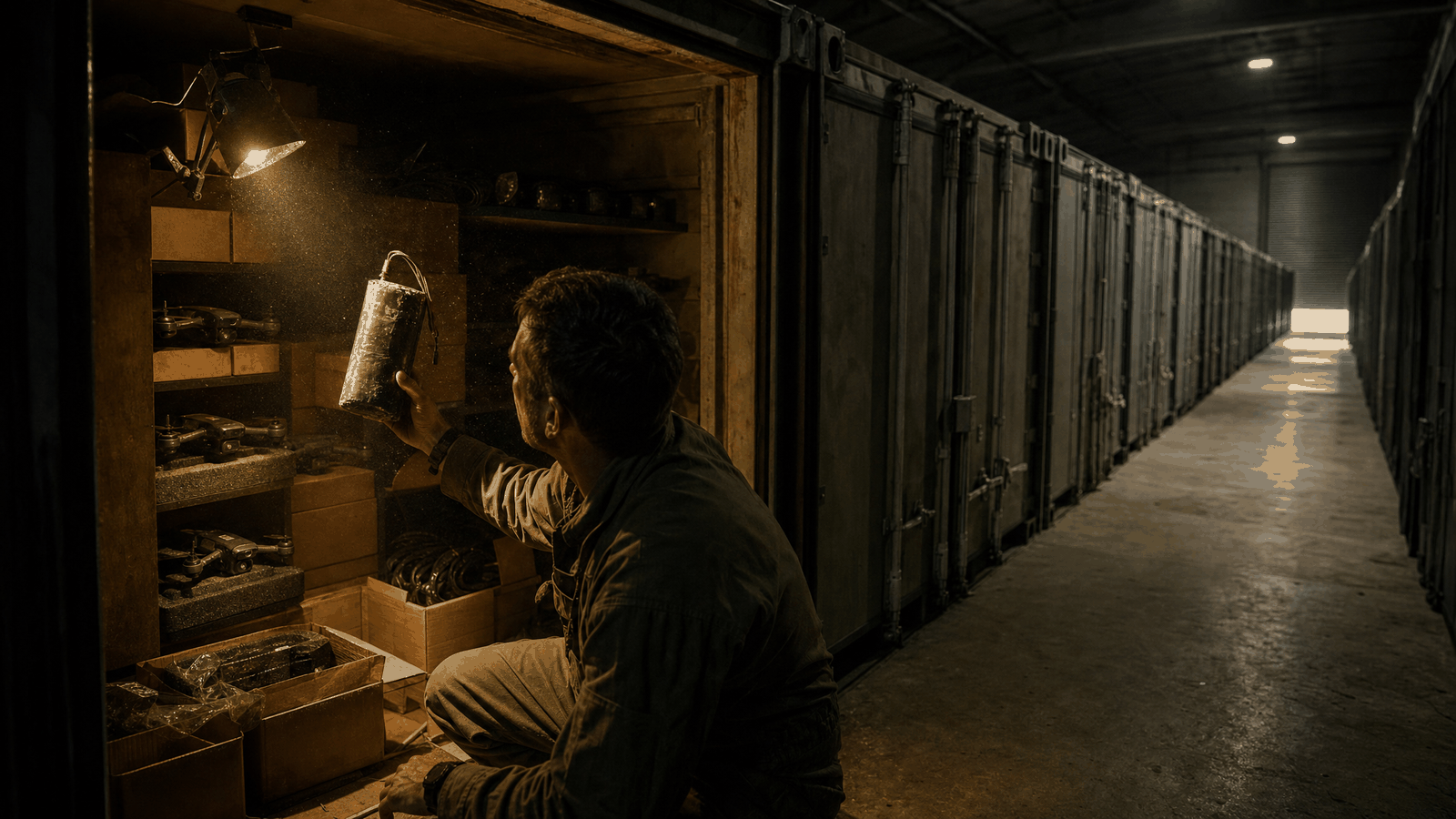
Notes on the 29 October 2026 episode of War on the Rocks, where host Ryan Evans sits down with Mike Horowitz, Ben Jensen and Stacie Pettyjohn to ask whether the phrase revolution in military affairs is worth anything. Horowitz calls the endless definitional fight an empty suit; Jensen prices the cost — another $50 billion thrown at the technology while the doctrine and force-design conversation is skipped buys you conex containers of drones with half-dead batteries. Horowitz also notes the money shortfall for these capabilities has been real. Educational listening notes only — no investment advice, no price targets, and the judgements here may be wrong.

Catalyst: Turbines Are Sold Out to 2032, and the Big Three Still Won't Build More
Notes on the 29 October 2026 episode of Catalyst with Shayle Kann, where Kann and gas turbine market analyst Tony Brough take stock of the order book: 2026 global orders now tracking 126 to 132 GW, delivery slots at the big three pushed out to 2030 through 2032, and 20 to 35 MW units quoted at $1,900 to $2,500 per kilowatt. Educational listening notes only — no investment advice, no price targets, and the judgements here may be wrong.

Odd Lots: Sixty Percent Said AI Financing Would Be a Problem. He Thinks the Answer Should Be a Hundred
Notes on the 29 October 2026 episode of Odd Lots, where hosts Tracy Alloway and Joe Weisenthal talk with Alexander Altmann, Global Head of Equities Tactical Strategies at Barclays, about the state of the AI trade: a Barclays investor survey in which about 60% said AI financing would be a problem, which Altmann argues should by definition be 100%; Microsoft's latest Azure growth of 48% against a 44.8% estimate, and Alphabet down 7.9% the same day while the index barely moved. Educational listening notes only — no investment advice, no price targets, and the judgements here may be wrong.

When the Door Is Shut, You Don't Even Know What's Missing Inside: Notes on a Semiconductor Materials Maker
Listening notes on Statementdog podcast episode 572 with Nytex chairman Chen Hsun-sen and president Chen Yu-han: unpacking the claim that semiconductors are a walled courtyard with the gate closed, and the conditions under which that moat stops working. Educational discussion of industry structure, not investment advice; no stock recommendations or price targets.

Cheeky Pint: The Airline CEO Putting Starlink on Every Plane
Notes on Cheeky Pint's 27 October 2026 conversation with United Airlines CEO Scott Kirby: at recording, 48% of United flights had Starlink with about three aircraft converted per day, he argues speed rather than free access is the proposition, and he says the lead lasts two to three years before the real ceiling — US air traffic control — binds everyone. Educational listening notes only, no investment advice, no price targets, and the judgements here may be wrong.