Research Notes
AI tools, certifications, books and small experiments, written down while learning. 61 posts.

From Chat Box to Colleague: What the Four Cloud AI Agents of the Past Month Actually Changed
TechWave EP157 lines up Instinct, Grok Bot, Muse and OpenAI's Dots, covering product positioning, security mechanisms, two business models, and a CPU demand estimate. These are my notes and extended reading — educational industry commentary, not investment advice, and no stock recommendations.

Running Three AI Coding Agents at Once: What Actually Gets Stuck? Orca's Demo vs. My Own Day Running Three Seats on Windows
In an August 21, 2026 video, Joe Maddalone used the open-source tool Orca to run three AI coding agents in parallel, each in its own git worktree. This post digs into one argument: worktrees fix agents overwriting each other, but not quota and not review, so adding seats moves the bottleneck onto you. Includes a comparison of Orca, herdr and Claude Code's built-in worktree flag, plus the snags I hit running three seats on Windows on September 22. Technical learning notes, not business advice.

We Lost the English Textbook CD, So I Built a Reading Machine from a Webcam and an AI
My kid needed the textbook audio to practice English, and the CD was nowhere to be found. I clipped a webcam onto an old laptop and wrote two tiny scripts with an AI: one takes a photo of the page, the other reads it aloud slowly in a natural offline voice. Here is how it works, how it compares with other options, what it can't do, and the full code at the end so you can use it. A personal write-up.

Is a Free AI Gateway Really Free? Free LLM API vs. OmniRoute, Argued Both Ways: It Depends on What You Send
In a September 4, 2026 video, Joe Maddalone shows Free LLM API stitching the free tiers of thirty-plus AI services into one endpoint, so a coding agent picks its own model and costs nothing, and compares it with OmniRoute. This post makes the strongest case for it, then argues the other side by checking each provider's official terms for the hidden price of 'free', and ends with my own experience routing work across several AI services. A personal technical write-up, not commercial advice.
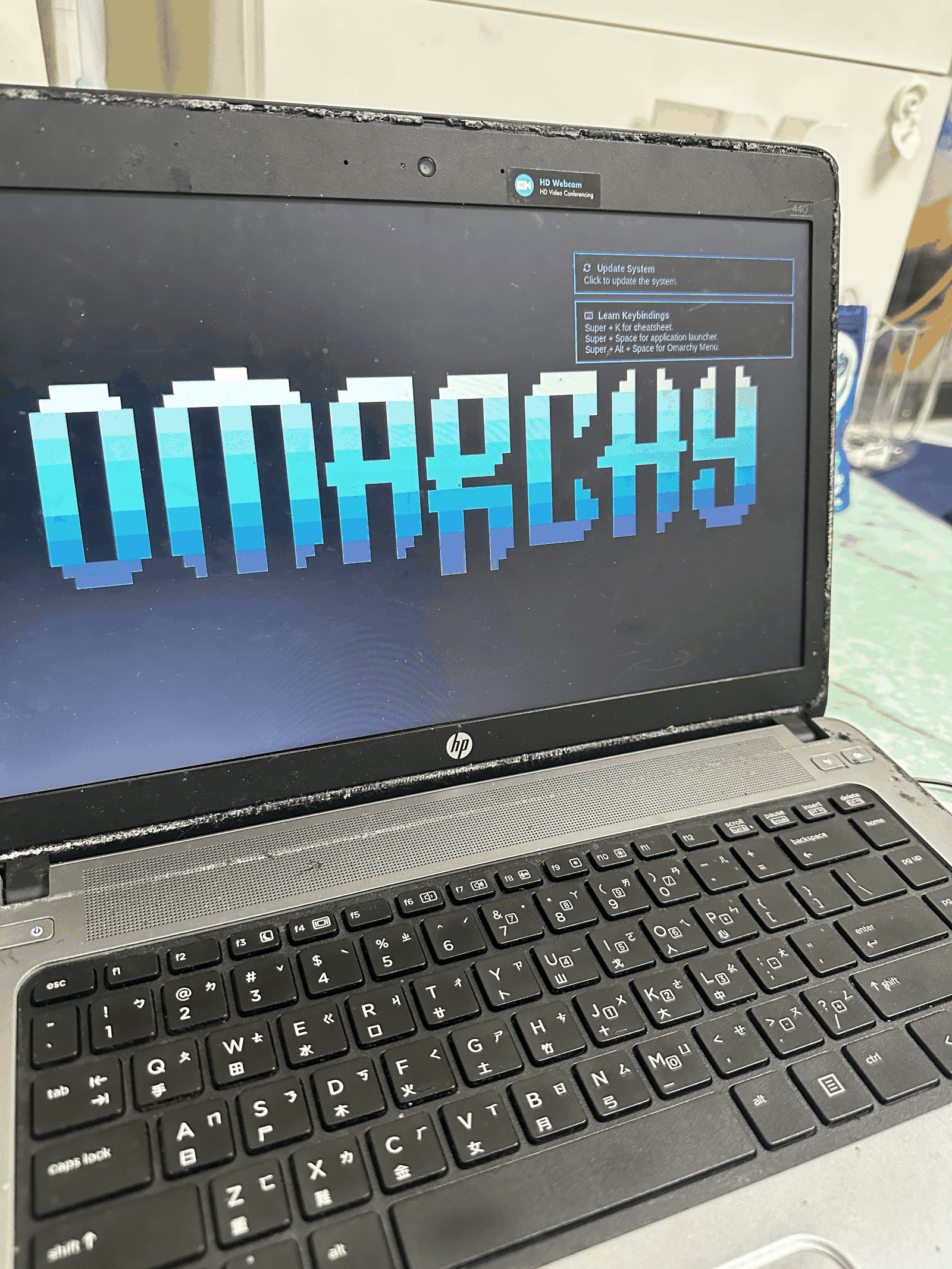
I Let AI Turn My Old Laptop Into a Home AI Server
An old HP laptop still running Windows 7 had been sitting in a drawer. I plugged in an install USB stick, typed a few short commands and entered my own passwords; AI did the rest over SSH from my other computer, installing Arch Linux and Omarchy, full-disk encryption, Tailscale and input methods, while keeping Windows 7 intact. What it did, where it got stuck, what it couldn't do, and the steps if you want to try it. Personal notes.

Is My AI Assistant's Data Safe on DeepSeek? I Read the Privacy Fine Print at OpenCode Go and OpenRouter
In October 2026 I wanted to move my home AI assistant off DeepSeek's official API, mostly for data sensitivity. This is what I found, in order: OpenCode Go costs $10 a month and lists DeepSeek as '0-day retention', but that agreement only runs to October 31; on OpenRouter, 31 providers serve the same DeepSeek V4.1 Flash, 25 of them are on its zero-data-retention list, and DeepSeek's own endpoint is not. Then the math on when a subscription beats pay-as-you-go. Personal notes, not a recommendation for any service.

Renting GPUs on vast, and How It Stacks Up Against RunPod: Booting Up Costs More Than the Rent
Notes from renting cloud GPUs on vast.ai and RunPod in September 2026: an RTX 3090 on vast at $0.22 an hour, 50 images for $0.18; how to choose between the two and where each one bites. A personal write-up, not an endorsement of any service.

A $0 AI App? Walking Through Hugging Face Spaces, Then Finding the Three Conditions Behind “Free”
In a September 11, 2026 video, Joe Maddalone built a background-remover app on Hugging Face Spaces in under ten minutes, called it from his own machine through an API, and paid nothing. This post walks through what he did in order, checks the official docs for the three conditions that make "free" work, and compares it with my own cloud GPU rental numbers: when the free quota is enough and when renting a card is the better deal. A technical learning note, not business advice.

Using AI as My MLA-C01 Tutor: What It Did in Four Weeks, and What It Couldn't
Part two of my notes from passing AWS MLA-C01 on September 26, 2026: having AI check the exam specs, write study notes in Traditional Chinese, quiz me five questions at a time with hints, and turn 271 past questions into Chinese audio, plus the things I still had to do myself. A personal study log.

Passing AWS MLA-C01 in Four Weeks: My Route, and the Deadline I Almost Missed
Notes from passing the AWS Certified Machine Learning Engineer – Associate (MLA-C01) exam on September 26, 2026: the exam specs, the English version's September 28 retirement and how I registered in Simplified Chinese instead, a four-week plan, and how I drilled questions. A personal study log.

Enough Fear to Fill the Trenches, Yet War Still Needs a Decision: Reading Westad's The Coming Storm
Yale historian Odd Arne Westad sets pre-1914 Europe beside today's multipolar world. The passage I keep coming back to: fear and resentment between Great Powers are never in short supply, and what actually pushed the world into war was a handful of concrete decisions made during a crisis. An educational reading note, not investment advice.

You Are Not a Knowledge Worker. You Are a Cognitive Athlete.
Reading Tommy Wood's The Stimulated Mind: why a day chopped into fifty-second fragments costs your brain more than long hours do. Educational and methodological notes; not investment advice.

Mac mini or a GPU for AI at home? First figure out which machine you're missing
A Chinese tech YouTuber explains why Mac minis are selling out: Macs can run language models but struggle with video, and he bought his for stability, low power and a complete software ecosystem, as a desk for directing AI agents. My own setup splits the same way: one machine directs, one old 8GB GPU does the heavy lifting, and training goes to rented cloud GPUs. A plain-language guide to what a control desk needs versus what compute needs. Personal notes, not buying advice.

One RTX 4090, from 20 to 184 tokens a second: when a local model is slow, find where it's stuck
A Chinese AI YouTuber took Qwen3.6 27B on a single RTX 4090 from 20 tokens a second to a peak of 184 with three moves: quantization, predicting several tokens at once, and diffusion-style drafting. Each move clears a different bottleneck. My old 8GB AMD card needed a different fix entirely: a differently shaped model took it from 1.8 to 23. A plain-language breakdown of what each move rescues, and what to check before buying a GPU. Personal notes and measurements, not buying advice.

Picking a GPU for Local AI: The New Cards Worth Buying, and the Old Ones to Skip
Two back-to-back videos from the YouTube channel 掄錘者: one ranks the four cards he keeps recommending, the other talks people out of cheap 48GB veterans. My own Windows desktop runs an older AMD card, and this month I logged what worked and what needed a detour for image generation, video generation, and local language models. A plain-language look at the two specs that matter first: video memory and BF16. Personal notes and test logs, not buying advice.
![[AI in Practice] Before You Install a Stranger's Code, Let AI Read the Source First](/covers/read-the-source-before-you-install.png)
[AI in Practice] Before You Install a Stranger's Code, Let AI Read the Source First
A 60-star file-transfer tool with no license. I had AI read all 280KB of its source in about five minutes, got four things to switch off or avoid, then checked three of its claims myself. Includes the questions you can ask AI before installing any small tool.

What Stops People From Using AI Is Often a Broken Keyboard Setting: Xiaotian Takes Apart Marvis
In a video from 2026-09-11, Xiaotian (xiaotianfotos) opened up Tencent's system-level AI assistant Marvis and argued that small computer problems stall ordinary users more than token limits do. Here is how Marvis hands you the right settings page, the reporting rules it sets for itself, and two times small problems tripped me up.

New Book Club: How Many Monkeys Were in the Room? Reading William Brody's Uncommon Sense
First pick for the New Book Club: Uncommon Sense by former Johns Hopkins president William R. Brody. The chapters I marked most are about luck: how an 'AI stock tips' email turned 64,000 strangers into 500 believers, why 1,000 fund managers will throw up about 31 geniuses, and the time my own test got fooled by random numbers. An educational reading note, not investment advice.

What Happens After the Quota Runs Out: CodexBar Reads It, a Regency Protocol Hands Over, and the Schedules Slim Down
The last piece showed how one line of quota readings sets the daily roster for four AI subscriptions. This one is about what happens when the quota actually hits zero: who takes over, what the caretaker is allowed to touch, how control comes back, and how the scheduled jobs slimmed down to match. Includes the GitHub repo for the regency protocol and five things I only learned by paying for them. Technical notes, not investment content.

The Beginner's herdr Handbook: If You Just Started with Claude Code or Codex, Here's How to Put Several AI Agents in One Window
Readers who just started with Claude Code or Codex kept asking how herdr works. This assumes you've only ever opened a terminal and have no feel for folders or config files yet: five terms in plain words, one install path, three keystrokes for the first session, and a second agent opened from the keyboard alone. Scripting sits at the end and can be skipped. A technical tutorial, not investment content.

No One Is Coming: Reading Crisis Engineering, Then Checking Whether My Stocks Are Actually in Crisis
Three engineers who rescued HealthCare.gov wrote a field manual for crises. The most useful part for me wasn't how to fight fires. It was their five indicators for deciding whether you're in a crisis at all. Six of my holdings are down by half, so I ran each one through the five boxes. Educational reading notes and extensions, not investment advice.

Take Over Your AI Agents from Anywhere: Tailscale + Herdr + Moshi, Step by Step
Fred's method: three replaceable components that bring the AI agent windows running on your computer straight to your phone. A Windows laptop installation guide, including two gotchas and how to fix them, plus a comparison with the UU Remote setup popular on X.

The Chip in Your Mac Nobody Looks At Just Made AI Inference 1.8x Faster: Xiaotian's Test, and the Number I Ran on Windows
Xiaotian spent a week on an entry-level Mac mini and cut video-to-vector indexing from 127 seconds to 70, using a part of Apple's chip most people never notice: the Neural Engine. I put his numbers next to the same kind of job running on my own Windows machine to answer a more practical question: when your computer is slow at AI, do you swap the machine or swap the model? Educational notes and extension, not a buying guide.

Does an AI Only Behave When You Swear at It?
A Chinese hardware YouTuber says swearing at AI works: DeepSeek eats it up, OpenAI ignores it. I take his rant apart and find two things inside: pulling the decision back, and asking only for the result. Then I check it against the twenty-three indicator tests I sent out today. No swearing needed, but hand the model a broken ruler and it will politely measure 100%. Education and methodology.