Investing & Markets
Chips, the AI supply chain, macro and money flows: slowly making sense of markets. 414 posts.

Medsider: Do the Hard Thing First, and You Earn the Right to Do More
Notes on the Medsider episode of 9 November 2026, where Scott Nelson talks with Marcus Mounir Hanana, CEO of Panther Life Sciences. He spent about 25 years between P&G and Amazon, the last four as CFO of Amazon Business, which grew from roughly $25bn to $60bn under his watch; in 2026 he took over a company of fewer than twenty people making dissolving microneedle patches. At the time of recording they were hand-making 100 to 150 patches a day in a clean room, up from five to ten a day a month earlier, with the first product planned for summer 2027. Every figure is as he stated it on the show. Educational listening notes only — no investment advice, no price targets, and my reading may be wrong.
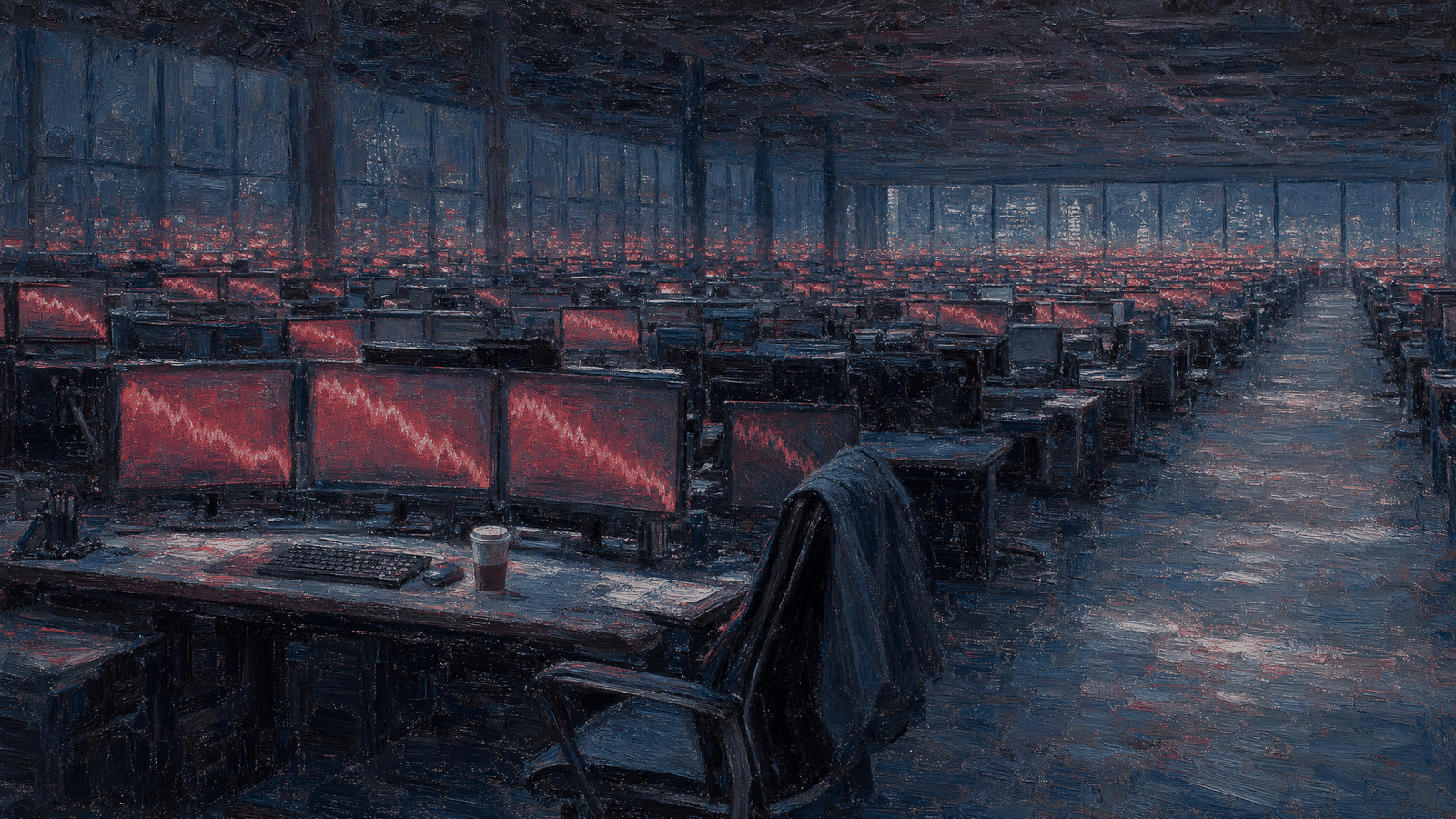
Odd Lots: Hundreds of Independent Bets, One Order to Leave
Notes on the Odd Lots episode published 11 November 2026 and recorded on 10 November, where Tracy Alloway and Joe Weisenthal talk with Bloomberg's chief hedge fund correspondent Nishant Kumar and macro strategist Michael Ball about the October drawdown that hit multi-strategy funds together: Millennium fell 2.3% in a month against an annualised return near 14%, with Balyasny, Point72 and ExodusPoint losing in the same month, while Pivotal Path puts the ten largest firms at roughly $2.2 trillion of positions backed by $300-350 billion of capital. Kumar calls it a working hypothesis: they have no portfolio-level detail and do not know what Citadel and D.E. Shaw did differently. Every number is a reading from the recording date. Educational listening notes only — no investment advice, no price targets, and the judgements here may be wrong.

Whose Products Sit at the Entrance — Notes on Supply Chained on Hon Hai Tech Day
Listening notes on Supply Chained, 10 November 2026, "Hon Hai Tech Day: What's Foxconn Working on These Days?": Tim Culpan of Culpium has just come back from Hon Hai Tech Day, where the EVs that used to guard the entrance had been moved off to the side and the door was given over to Dell, Cisco and HP hardware with a whole wall of exploded parts. The piece takes apart how the reading — that the company is rewriting itself from assembler to parts maker — is derived, the conditions under which it fails, and why it is hard to separate from the rival reading that this year's headliner simply followed AI server demand. Educational discussion of research method, not investment advice; no stock recommendations or price targets.

TechWave EP161: Do Americans Hate Data Centres, or AI?
Notes on TechWave EP161 (9 November 2026): host Harry works through the anti-AI backlash that followed the US midterms, citing polls where 87% of voters weighed AI data centres in their vote and 76% opposed one in their own community; he traces a water figure that was inflated 1,000-fold and sets it against Google's 0.25 millilitres per Gemini prompt. Educational listening notes only — no investment advice, no price targets, and the judgements here may be wrong.

Asianometry: Cisco's Real-Time Dashboard Was Measuring an Echo
Notes on Asianometry's 'How Cisco Got Bullwhipped', published 8 November 2026, on how Cisco in 2000 mistook an amplified order signal for demand: lead times stretched to four to six months in early 2000, customers double- and triple-ordered, salespeople added their own buffer, Cisco committed to suppliers on a 60% growth forecast, inventories rose 87% year on year and another 58.8% the following quarter, and in April 2001 the company took a US$2.2 billion inventory charge and cut 8,500 jobs. This piece makes the episode's case at its strongest, then argues the other side, then says which one I think holds and on what condition. Educational listening notes only — no investment advice, no price targets, and the judgements here may be wrong.

The Account It Sits In Decides How Big It Can Grow — Notes on Investor's Sunday on the J.League and the Business of Japanese Sport
Listening notes on Investor's Sunday, 8 November 2026: Yasuhide Okabe, co-representative of the Sports Business Summit, sets the Los Angeles Lakers' reported sale at around 2 trillion yen — roughly 20 times annual revenue — against Red Bull's purchase of Omiya Ardija from NTT at a rumoured 300 million yen, and explains what it costs Japanese corporate-owned clubs to be booked as advertising spend. It also covers why negotiating intelligence, one-year contracts and a thin off-the-pitch talent pool keep the transfer balance in deficit, and flags which figures are only his retelling. Educational discussion of research method, not investment advice; no stock recommendations or price targets.

Macro Musings notes: the same sentence killed a coin five years ago and now carries one
The 9 November 2026 episode of Macro Musings was recorded live at Wharton's conference on the law and economics of payments, with host David Beckworth, Visa Institute president Todd Fox, and Fidelity's head of global policy Martha Miller. Fox reduces the gap between OpenUSD and Libra to two things: reserves you can name because regulation spells them out, and the fact that Libra was a white paper. Miller adds the test — when the value comes from interoperability, consortium value skyrockets. Educational notes, not investment advice, no tickers, no price targets, and my reading may be wrong.

Odd Lots: New York's Trash Problem Runs Through an 1811 Street Grid and a Truck Nobody Built
Notes on the Odd Lots episode published 9 November 2026, where Tracy Alloway and Joe Weisenthal talk with Joshua Goodman, Deputy Commissioner at New York City's Department of Sanitation, about how the city gets its garbage out: 24 million pounds of refuse, recycling and compost a day, a 70,000-block volumetric analysis, a side-loading collection truck prototyped in ten months, and a parking impact estimate revised from 150,000 spaces down to roughly 30,000. Containerization started in West Harlem in June 2025, with a commitment to cover all 59 community districts by the end of 2031 — on annual budget cycles, so the commitment is not an appropriation. Educational listening notes only, no investment advice, no price targets, and the judgements here may be wrong.
A Week of Serenity's Public Posts, Lined Up: This Week the Evidence Was All Written Into Contracts
Serenity, an independent researcher on X, posted a batch of public notes between 2 and 7 November 2026. Laid out in order, none of what moved the argument came from share prices: a share-for-share deal bought up upstream laser supply, a long-term agreement came in at more than five times the size of the one before it, and a five-year contract arrived with ninety percent of the equipment paid up front. This piece reads the week in the order things happened. Industry structure only: no tickers, no recommendations, no price targets.

Podcast Notes Weekly: Nov 02–Nov 08, 2026
The takeaways from 25 podcast notes I wrote this week (Asianometry, Macro Musings with David Beckworth, Bloomberg Odd Lots, Serenity Weekly, Caibaogou (財報狗), The Circuit and more). Two to four sentences per episode, with a link to each full post.

Gooaye EP712: The Day the Market Broke, He Went to Disneyland
In Gooaye EP712 (7 November 2026), host Hsieh Meng-kung was in Japan when Taiwan's market opened sharply lower the day before. He had bought the Wednesday dip, bought again at Friday's open, then day-traded part of that dip position out mid-session — and regretted it after the National Stabilization Fund stepped in. He compresses post-midterm AI policy risk into one observable switch: whether new data center permits get blocked. Orders through 2027 are unaffected, he says; what a permit freeze would hit is 2028–2029 revenue, and the market prices that early. Also: Musk's post about a SoftBank turbine default, and the order the supply chain gets cut in. Educational notes, not investment advice, no price targets, and my reading may be wrong.

One State's Power Permits Against the 2028 Compute Pipeline — Listening to MacroMicro EP. 221
MacroMicro's After Meeting EP.221 (November 2026) takes the US midterms — Democrats winning both chambers, Texas flipping — and translates the result into a question about data centre power permits. Educational listening notes on how to read a moratorium and why free cash flow turned negative — no price targets, no stock recommendations.
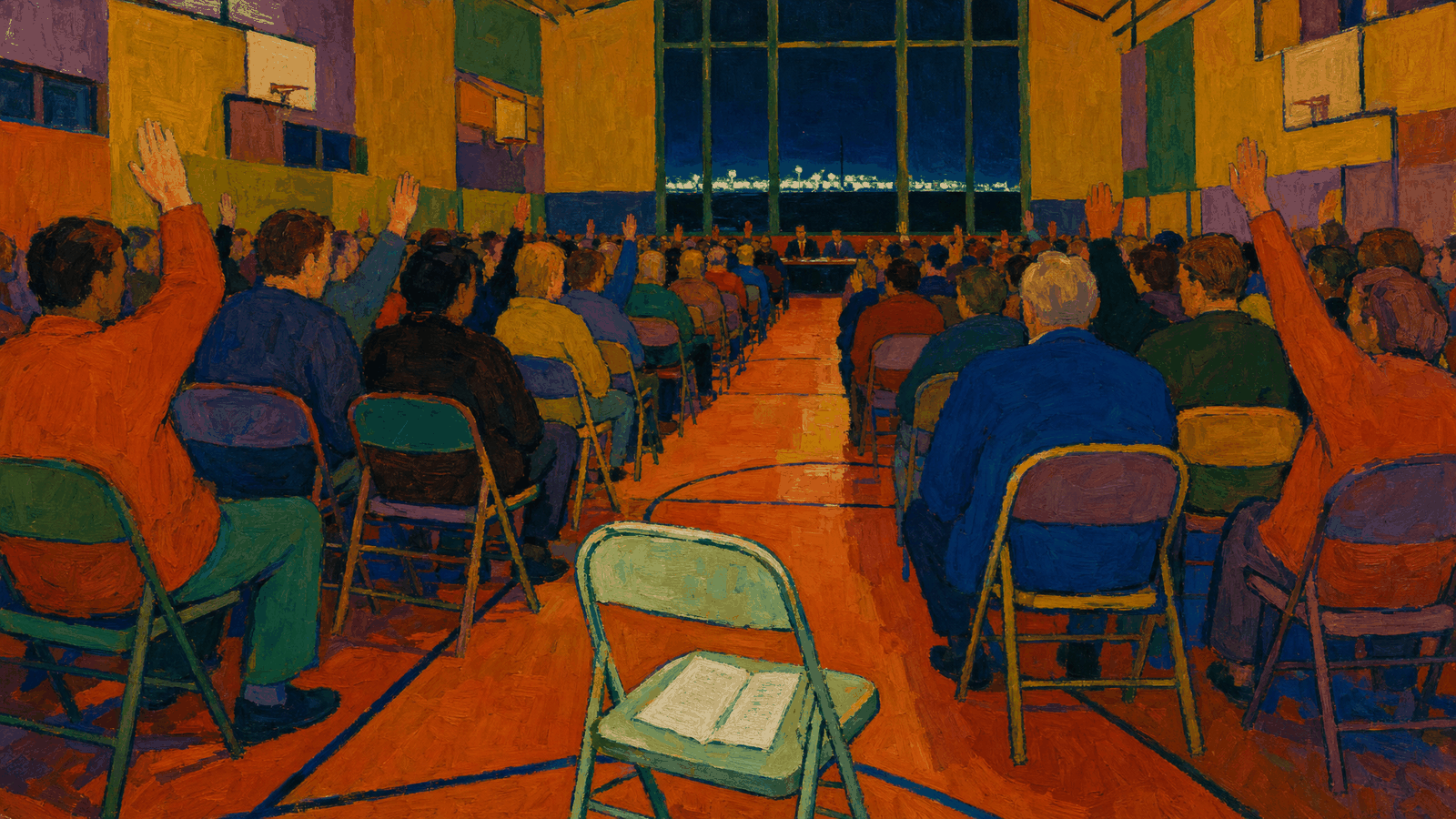
The Compound and Friends: The Data Center Top Was a Tax Increase in June
Notes on the 6 November 2026 episode of The Compound and Friends with Daniel Clifton, who runs a Washington policy research team, on the market after the 3 November midterms. His throughline is data centers: 40 local ballot measures on them that night, 38 of which went against the industry, and he dates the relative peak in AI hardware stocks versus the S&P 500 to the third week of June, when Virginia passed a $600 million data center tax and the Texas governor imposed a moratorium. He also brings the other side: since 1938 the S&P 500 has never fallen in the twelve months after a midterm, averaging 14.8%. All figures are as stated on the show. Educational listening notes only — no investment advice, no price targets, and the judgements here may be wrong.
The Bottleneck Moved From the Machine Room to the Ballot Box — Notes on Statementdog on the Midterms, AI Data Centres and Marvell Buying Lumentum
Listening notes on Statementdog podcast episode 576: chief analyst Sky puts this week's drawdown down to a timing deferral caused by politics blocking the supply side, while on demand he cites Palantir's latest call, where sovereign AI commercial revenue has passed government revenue; the other half of the episode is Marvell buying Lumentum for what the inside of the rack looks like three to five years out. The piece takes apart the weakest links in that reasoning and names the conditions you can track. Educational discussion of research method, not investment advice; no stock recommendations or price targets.
Enrichment Is Step Three: Catalyst on the Geopolitics of Nuclear Fuel
Notes on the November 5, 2026 episode of Catalyst with Shayle Kann, featuring General Matter CEO Scott Nolan on why the five-step nuclear fuel chain breaks at enrichment. Educational commentary; no investment advice and no stock recommendations.

MacroVoices: Putting Your Hand Up and Saying No More Doesn't Make the World Comply
Notes on MacroVoices episode 557, published 5 November 2026, in which Erik Townsend talks with Rabobank global strategist Michael Every about what the Democratic sweep of both chambers means for markets and geopolitics. Every's core claim: a vote against war does not stop war arriving, and repealing tariffs does not buy cheaper energy or a stronger America, because tariffs are the remaining lever for re-industrialisation and re-industrialisation is what pays for the military-industrial base behind America's policeman role. Reference readings are oil down roughly $18 from Friday's high to the day after the count, and the dollar index at 101.18, with the near-term variable sitting in the window before the new Congress is seated in January. Educational listening notes only — no investment advice, no price targets, and these judgements may be wrong.
The Meb Faber Show: Dance If You Like — Just Count Your Steps to the Fire Exit
Notes on episode 656 of The Meb Faber Show, published 6 November 2026, where Meb Faber talks with Albert Edwards, global strategist at Société Générale and 44 years in the same job, about the rate cycle and how bubbles actually end: the S&P 500's twelve-month forward P/E has fallen from 23–24 times to below 19, tech from 33 to around 20. Edwards thinks the market has priced two or three hikes where 200 basis points are needed, that 100 basis points more on yields would be curtains for equities, and that ten-year Treasury yields head to 10% over the long run — with a forward P/E he imagines near six and the S&P down 50 to 60% at some stage. He also concedes quantitative easing had him wrong for twenty years. Educational listening notes only — no investment advice, no price targets, and the judgements here may be wrong.

Odd Lots: Texas Is Still Texas — Only the People Issuing the Permits Changed
Notes on the Odd Lots episode published 6 November 2026 and recorded on 5 November, where Joe Weisenthal and Tracy Alloway talk with Skanda Amarnath of Employ America about the macro implications of Democrats taking both the House and the Senate: Bank of America's Michael Hartnett had said the S&P 500 could fall 10% on a Democratic win, the index rose about 1.5% the day after the count, and on the recording day Tesla was down 10% and SpaceX another 7.5%. Skanda's read is that six-year Senate terms tilt Fed appointments for four to six years and that inflation may sit near 3% for longer than the market expects. Every number is a reading from the recording date. Educational listening notes only — no investment advice, no price targets, and the judgements here may be wrong.

Odd Lots: Coming First in Round One Was the Worst Thing That Happened to Him
Notes on the 5 November 2026 episode of Odd Lots, where hosts Tracy Alloway and Joe Weisenthal talk with James Bosworth — non-resident fellow at the Stimson Center and author of the Latin America Risk Report — about Brazil's upset: the night before the vote Bosworth had Flavio Bolsonaro at a 64% chance of winning, the prediction markets had him at 80% and briefly 87%, Lula won by four million votes, and turnout moved less than 2% between the two rounds. Educational listening notes only — no investment advice, no price targets, and the judgements here may be wrong.

Spread Out to Stay Alive: War on the Rocks on the Army's C2 Reboot
War on the Rocks, recorded 2026-11-04 at the AUSA annual meeting, with Lt. Gen. Matthew W. McFarland (I Corps) and Maj. Gen. Patrick J. Ellis (4th Infantry Division) on Next Generation Command and Control. Listening notes on which of the four layers holds pricing power, the limits of training-ground numbers, and command discipline once you can see everything. Educational, not investment advice.

Water Fills the Upper Basin Before It Flows On — Notes on Statementdog on Why Foundry Stays Short Through 2027
Listening notes on Statementdog podcast episode 575: Statementdog's chief analyst Xiaozhen uses TSMC's third quarter split — high performance computing up 83% year on year while smartphone growth fell to 4.3% — to explain why leading-edge capacity stays short through 2027, and how HBM base dies and server support chips push the shortage down into mature nodes. The piece also takes apart the weakest links in that reasoning and names two conditions you can track. Educational discussion of research method, not investment advice; no stock recommendations or price targets.

Cheeky Pint: When Satellites Got Cheap the Bottleneck Was Launch. Now Reactors Got Small and the Bottleneck Is Fuel
Notes on the Cheeky Pint episode published 3 November 2026, where Scott Nolan of General Matter explains why the United States has no uranium enrichment capacity of its own. He says about a quarter of American enriched uranium is still imported from Russia and the congressional ban takes effect on 1 January 2028, and that at today's market prices fuel can account for half the levelised cost of energy for some small reactor designs. Educational listening notes only — no investment advice, no price targets, and the judgements here may be wrong.
Columbia Energy Exchange: The Fastest-Growing Line on the Bill Is the One Nobody Reviews
Notes on the Columbia Energy Exchange episode published 3 November 2026, where Katie Dykes — until this summer the commissioner of Connecticut's Department of Energy and Environmental Protection — explains why there is no single lever for electricity affordability but roughly 25 of them, spread across the legislature, the utility commission and FERC. Transmission is still the smallest share of the bill, yet for Connecticut ratepayers it has nearly doubled since 2015. Educational listening notes only — no investment advice, no price targets, and the judgements here may be wrong.

The Compound: The Pain in Your Account and the Median Stock in the Index Are Two Different Things
Notes on the What Are Your Thoughts livestream from The Compound and Friends, 4 November 2026, where Josh Brown and Michael Batnick lay out the charts: two thirds of S&P 500 members have had a 20% drawdown this year, in line with the historical average, while the tech column reads 93%; the equal-weight index beat the top 20 by the widest margin since 2009; Alphabet shed roughly 500 billion dollars of market cap in a day and sits 30% off its high; Apple closed higher on 65% of days the semiconductor index fell 2% or more. All figures are readings from that day's session and after-hours. Educational listening notes only — no investment advice, no price targets, and the judgements here may be wrong.